
The 3 Stages of a Wave: A Simple Guide to Timing Your Take-Off
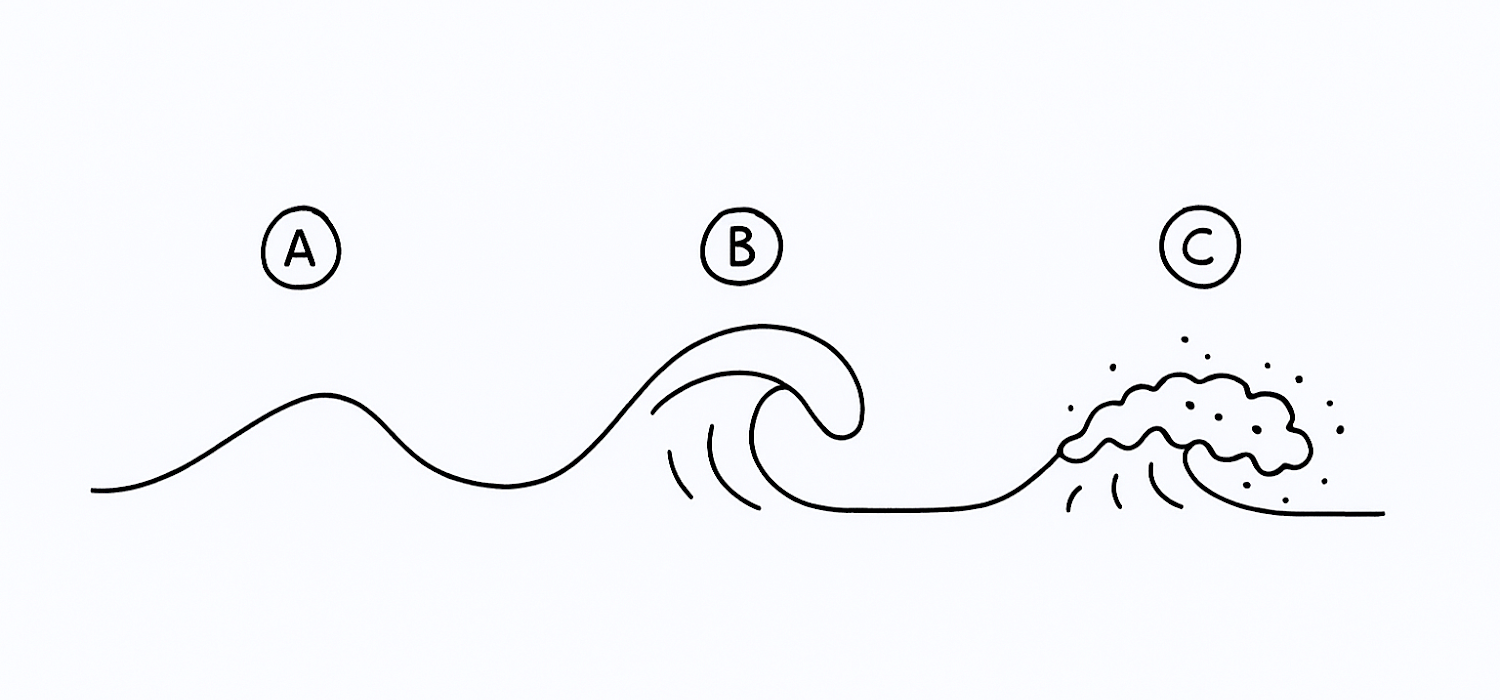
If you want to choose better waves, pop up at the right time, and actually surf with the wave instead of fighting it… you need to understand what’s happening under your board long before you stand up.
Every wave goes through three clear stages: A, B, and C.
And when you know how to read them, everything in your surfing becomes easier — from catching your first green waves to linking better lines on the face.
Let’s break them down.
Stage A — The Approach
This is when the wave is still forming and moving toward you. It’s not steep yet, but it’s starting to show shape and direction.
This is the moment you should be looking early, turning your board, and beginning to paddle if you think the wave has potential.
Why Stage A matters:
- You need to start paddling here to create speed.
- It gives you time to position yourself correctly.
- It’s where most beginners miss the wave — simply because they react too late.
Good surfers aren’t stronger… they just start earlier.
Stage B — The Lip
This is where the wave pitches and begins to break — the steepest, most powerful moment.
Your pop-up should happend a little bit before this stage, because at this stage, the wave is very steep and the take off will be really hard.
Why Stage B matters:
- Pop up too late, and you’ll get thrown over the lip.
- We use this part of the wave to make advance maneuvers.
Stage C — The Whitewater
Once the wave breaks, all that clean energy turns into turbulent whitewater.
Still powerful — but no longer offering the same shape or speed.
Stage C is useful for learning stability, pop-ups, and correcting mistakes, but it’s not where you want to take off if you’re working toward riding green waves.
Why Stage C matters:
- It helps beginners build confidence.
- It teaches you how to handle energy and balance.
- But it’s not a substitute for learning to catch unbroken waves.
If your goal is progression, Stage C is practice — not the destination.
How to Use This in Your Surfing
Understanding wave stages helps you anticipate better — and anticipation is everything in surfing.
Here’s what to focus on next session:
- Spot waves early in Stage A.
- Build speed and commit as the wave stands up.
- Pop up right as it transitions into Stage B, but not in stage B if you don't want to wipeout (only experts).
- Use Stage C for training.
Do this consistently, and your timing, confidence, and wave count will improve immediately.
Published: 03 Feb by neil
Tagged: Surfing, surf lesson, waves
OTHER SIMILAR ARTICLES
What to Pack for Your Surf Trip to the Algarve (and What to Leave at Home)
Your go-to checklist from the team at Tiny Whale Surf LodgeREAD MORE

Adam's Top 5 Algarve Paddleboarding Spots
Having been paddleboarding pioneers here in the Algarve, it’s fair to say that we know some of the best paddleboarding spots in the Algarve.READ MORE

What is the Best Season to Surf in the Algarve?
Discover when is better to surf in the Algarve.READ MORE